Fidget spinner bearings explained — R188 vs 608, steel vs ceramic, and how to upgrade
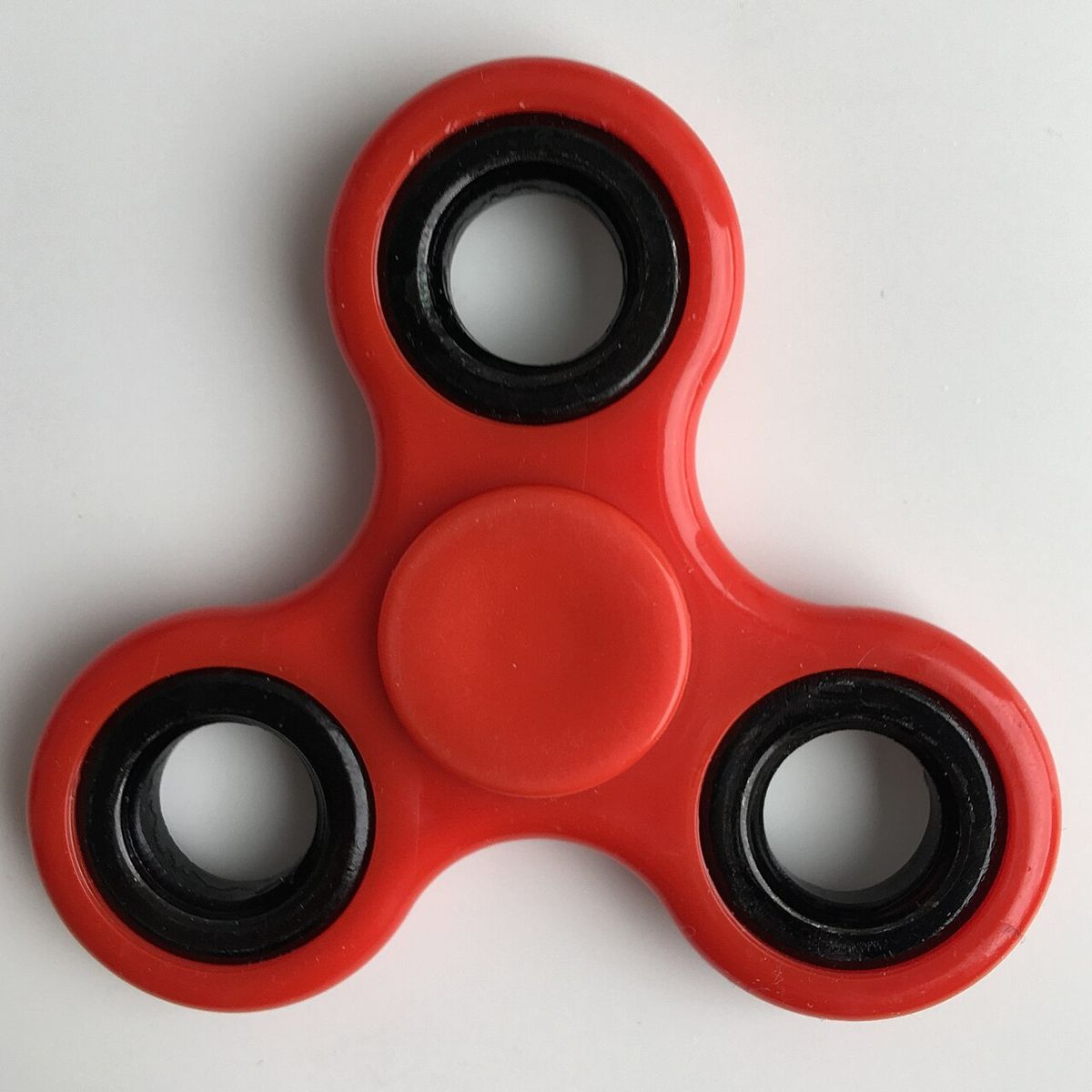

Two spinners can look identical and behave completely differently. One whispers for two minutes; the other rattles to a stop in twenty seconds. The difference is almost never the shape or the metal of the body. It's a part about the size of a ₹1 coin hidden in the middle: the bearing.
This guide explains what that bearing is, how to decode the jargon on listings ("R188", "ZZ", "ABEC-7", "hybrid ceramic"), what genuinely makes a spinner spin longer, and how to clean or replace a bearing yourself — with Indian prices and the honest limits of what an upgrade can do.
What a bearing actually does
A fidget spinner is a weighted body around a single ball bearing. The bearing has four parts:
- Inner race — the small ring your fingers pinch (via the button caps).
- Outer race — the ring pressed into the spinner body.
- Balls — usually 8 to 10 small balls rolling between the two races.
- Cage (retainer) — keeps the balls evenly spaced. Nylon or stainless steel.
When you flick the body, the outer race and body rotate around the stationary inner race. Every bit of friction inside the bearing — balls rubbing the cage, grease being churned, dirt grinding — turns spin into heat and noise. A spinner's rotation decays gradually rather than stopping suddenly, which is why small amounts of friction make such a big difference to total spin time. (Wikipedia)
The three sizes you'll see
Nearly every spinner sold in India uses one of three standard bearing sizes:
| Bearing | Bore (inner) | Outer diameter | Width | Where you'll find it |
|---|---|---|---|---|
| 608 | 8 mm | 22 mm | 7 mm | Cheap plastic spinners; also skateboards and inline skates |
| R188 | 6.35 mm (¼") | 12.7 mm (½") | 4.76 mm (³⁄₁₆") or 3.18 mm (⅛") | Most metal and "premium" spinners; also yo-yos ("size C") |
| 606 | 6 mm | 17 mm | 6 mm | Uncommon in spinners |
The 608 is the bearing that came with the 2017 spinner craze — the same part used in skateboard wheels, mass-produced and very cheap. The R188 is smaller and is what you want in a metal spinner. Enthusiast guides agree on why: for the same total weight, a spinner built around a small R188 bearing out-spins one built around a 608, because more of the mass sits in the body, out at the edges, rather than in a big steel bearing at the centre. (Fidget Doctor, A Better Kit)
How to tell which one you have: measure the outside of the bearing with a ruler or calipers. About 22 mm across is a 608; about 12.7 mm is an R188.
Note the R188 width: the shielded and sealed versions (R188ZZ, R188-2RS) are 4.76 mm wide, while some open bearings are 3.18 mm. If you're buying a replacement, measure the old one first — a 3.18 mm bearing will rattle in a pocket cut for 4.76 mm.
Decoding the jargon on listings
ZZ / 2Z — two metal shields, pressed in. Keeps dust out, but makes the bearing hard to clean. Most bearings sold as general engineering parts are ZZ.
2RS / RS — rubber seals. Excellent at keeping dirt out, but the seals rub on the inner race, which adds drag. Bad for spin time.
Open / no shields — nothing covering the balls. Fastest and easiest to clean; also collects pocket lint fastest. Most spinner-specific bearings are open, and the spinner's button caps do the job of keeping big debris out.
Pre-lubed vs dry — bearings made for machinery arrive packed with grease, which is great for a motor and terrible for a spinner. Lubricant adds friction and cuts spin time, so spinner bearings are usually run dry or with a trace of very thin oil. (A Better Kit) This is why a "precision" bearing bought off an industrial listing often spins worse than the one it replaced until you clean it.
ABEC-1 / 3 / 5 / 7 — a manufacturing tolerance grade: the higher the number, the tighter the dimensional tolerances. It is not a speed rating. A clean, dry ABEC-3 bearing will out-spin a greasy ABEC-7 one. Treat "ABEC-9 ultra speed" in a ₹300 spinner listing as decoration.
10-ball — more balls spread the load and usually make the spin smoother and quieter. Spinner-specific R188s are commonly 10-ball. (Skilltoyz)
Flat vs concave — a yo-yo term. Concave bearings are shaped to centre a yo-yo string; they make no difference in a spinner. Buy flat.
Steel vs hybrid ceramic vs full ceramic
| Type | Races | Balls | Spin time | Noise | Rust | Price (one R188) |
|---|---|---|---|---|---|---|
| Chrome steel | Chrome steel | Chrome steel | Baseline | Quiet when clean | Rusts if it gets wet | Cheapest |
| Stainless steel | Stainless | Stainless | Similar to chrome steel | Quiet | Resists rust | Cheap |
| Hybrid ceramic | Stainless | Ceramic (Si₃N₄ black, or ZrO₂ white) | Longest | Quietest | Races can still rust | ~£3–4 abroad for a good one |
| Full ceramic | Ceramic | Ceramic | Often shorter than hybrid | Noisier, "gritty" feel | Won't rust | Most expensive |
Three things worth knowing:
- Hybrid ceramic is the enthusiast default. Stainless races with silicon-nitride balls — the black ones are generally recommended for spin time. (A Better Kit, Fidget Doctor) A typical good one is 10-ball, ABEC-5, stainless cage, no shields, run dry. (Skilltoyz)
- "Full ceramic" isn't the top tier. It sounds premium, but full ceramic bearings are more fragile, often noisier, and in several published comparisons spin for less time than a good hybrid. One buyer's comparison had a full ceramic at 1:03 against a hybrid at 1:38 in the same spinner. (A Better Kit)
- The gains are real but not magic. The best evidence we found is anecdotal — individual buyers timing one spinner before and after. One reported a jump from about 2:20 to 3:30 after swapping the stock bearing for a hybrid, with no cleaning. That's a big improvement, but it's one spinner, not a controlled test. Be suspicious of any listing promising "8–12 minute" spins.
What actually makes a spinner spin longer
In rough order of importance:
- A clean, dry bearing. The cheapest upgrade there is. Most "my spinner got slow" problems are grease or grime, not a worn-out bearing.
- Mass at the edges. Weight far from the centre stores more energy for the same flick. Heavy metal bodies — especially with brass or steel weights in the arms — spin longer than light aluminium or plastic ones.
- A small bearing (R188) rather than a 608, for the reason above.
- Bearing type — hybrid over steel.
- Balance. An unbalanced body wobbles and wastes energy, and you can feel the vibration through the caps.
What doesn't matter much: the ABEC number on a cheap listing, "high speed" in the title, and how hard you flick it beyond a firm, clean flick.
How to clean a spinner bearing
This works for steel and hybrid bearings. It fixes most slow, gritty or noisy spinners.
You'll need: 90–99% isopropyl alcohol (sold at chemists and on Indian marketplaces), a small glass or jar, a toothpick or thin flat blade, and a hair dryer on the cool setting or compressed air.
- Remove the button caps. Most press-fit caps pull or twist out; a fingernail or a thin card under the edge helps. Some are threaded — unscrew them. On some metal spinners the caps are glued; don't force those.
- Take the bearing out if you can. On many spinners it pushes out with firm thumb pressure. If it's press-fitted tight into a metal body, leave it in and clean it in place.
- Remove any shields (ZZ only). Pry gently with a thin blade at the edge. Bent shields can't go back; that's fine — run it open.
- Soak in isopropyl alcohol, swirling and spinning the bearing with your finger. Replace the alcohol and repeat until it comes out clear. (A Better Kit)
- Dry completely with the cool hair dryer or compressed air while turning the bearing. Don't wipe it with tissue or cloth — lint is worse than dirt. Steel races left damp will rust. (MightyEDC)
- Decide on oil. Leave it dry for maximum spin. If you want it quieter and longer-lasting, add one tiny drop of very light oil (clock or sewing-machine oil) — accept that it'll spin a bit less. Never use grease, coconut oil, or WD-40.
- Reassemble and test. A good clean bearing should feel smooth with no grinding when you turn it slowly.
Stronger solvents — acetone, lighter fluid, naphtha — strip grease faster but are flammable and can crack or cloud plastic bodies and caps. Isopropyl alcohol is enough for a spinner.
Full ceramic bearings rarely need anything beyond a rinse and dry. Hybrids still have steel races, so they still need drying.
Upgrading a bearing in India
Is it worth it? On a ₹200–₹500 plastic spinner with a 608 bearing, not usually — a good bearing can cost as much as the spinner, and a light plastic body won't take full advantage of it. On a metal spinner that already takes an R188, a clean or a hybrid upgrade is the single best improvement you can make.
Where to get one:
- Indian marketplaces and bearing shops sell R188ZZ and R188-2RS bearings as general engineering parts. Remember these arrive shielded and greased — expect to remove the shields and clean them before they spin well.
- Import resellers such as Cart2India list branded R188s with customs and shipping included, but prices are high — a 2-pack of sealed chrome-steel R188s was listed at ₹2,700 when we checked on 1 November 2026. That's far more than the bearing is worth; it's the cost of importing one small parcel.
- International spinner and yo-yo shops sell spinner-specific hybrid R188s (10-ball, open, dry) for a few pounds or dollars each, but shipping and customs to India usually cost more than the bearing. Worth it only if you're ordering several.
Fitting it: a replacement must match the old bearing's size and width exactly. Press it in squarely with even thumb pressure on the outer race — never push on the inner race or balls. If the pocket is loose, the bearing will rattle; a drop of thin glue on the outer race fixes that, but makes future swaps harder.
What sellers in India actually tell you
Most listings don't tell you much. The Stainless Steel Sprockets spinner at MakerMesh, for example, gives the size (36 × 60 mm) and material but not the bearing. MakerMesh's Fang spinner does state an R188. On Flipkart, budget metal spinners mostly say "steel bearing" or "ultra speed" without a size or type. Both were in stock when we checked on 1 November 2026 (the Sprockets in black only; the Fang in rainbow and gold).
If bearing quality matters to you, ask the seller three questions before buying: what size (R188 or 608), what type (steel, hybrid or full ceramic), and shielded or open. A seller who can answer is usually selling a better spinner.
Who should care — and who shouldn't
Worth caring about if you already own a metal spinner, you use it daily, and it's started to feel gritty, slow or loud.
Not worth caring about if you're deciding whether you like spinners at all. Buy a cheap one first. If you're still reaching for it after a month, then think about bearings.
FAQ
Why has my spinner become slow and noisy? Almost always dirt, pocket lint or dried grease in the bearing. Clean it with isopropyl alcohol as above before buying anything.
Can I use a skateboard bearing in my spinner? Only if your spinner takes a 608 — skateboard bearings are 608s. Clean the grease out first. They won't fit a spinner built for an R188.
Should I oil my fidget spinner bearing? For maximum spin time, no — run it dry. One tiny drop of very light oil makes it quieter and protects steel from rust, at the cost of some spin. Never use thick oil, grease or WD-40.
Is a ceramic bearing worth it? A hybrid ceramic is the best upgrade for a metal spinner. A full ceramic is usually not — it's more fragile and often noisier.
What does ABEC-9 mean on a cheap spinner? Very little. ABEC is a tolerance grade, not a speed rating, and listings on budget spinners rarely reflect a tested grade.
Are fidget spinners safe for kids? Most spinners have no magnets, but small caps and bearings can come loose and are a choking hazard, and regulators have warned about button batteries in light-up spinners. Everything on this site is rated 14+. See magnet safety for magnetic fidgets.
Related
- Why the material of a fidget matters
- Spinner vs slider vs clicker — which type should you buy?
- Quiet fidget toys for the office and meetings
- Glossary: bearing, spin time
Sources
- Fidget Doctor — Best fidget spinner bearings
- A Better Kit — Best fidget spinner bearings: buyer's guide
- Skilltoyz — R188 hybrid ceramic 10-ball bearing (spec sheet)
- MightyEDC — How to clean and maintain your fidget spinner
- Wikipedia — Fidget spinner
- NSK — R188 series bearing dimensions
- Cart2India — R188-2RS listing (Indian import pricing)
- MakerMesh — Stainless Steel Sprockets spinner
- MakerMesh — MM Premium Fang spinner
- Flipkart — Premsons metal hand spinner