Haptic coins explained — how they work, what they cost in India, and are they worth it?
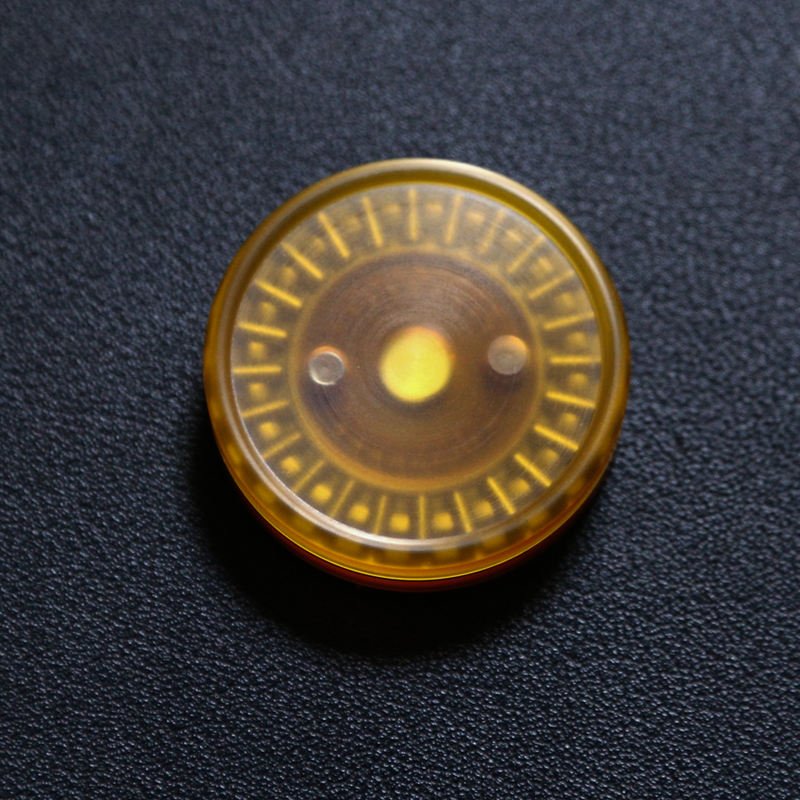
A haptic coin is the fidget you can use with your hand in your pocket. It's two machined discs, typically 38–48 mm across and 10–13 mm thick, joined by a mechanism that makes them click into position as you twist or push one against the other. No spinning arms, no moving parts sticking out, and nothing on your desk for anyone to look at.
They're also the most confusing category to buy. The same nickname ("Ding Ding", "milk cap", "PPB") gets used for coins that work completely differently, prices run from about ₹700 to over ₹36,000, and almost every premium design is made in China and sold in dollars. This guide explains what's actually inside, how the four main mechanisms differ, what you can buy in India today, and what importing a "real" one costs once customs is done with it.
How we wrote this
We haven't had any of these coins in hand yet. Everything below comes from maker spec sheets, retailer pages and listing photos, all checked on 2 November 2026. Seller-stated sizes and weights are labelled as such.
What a haptic coin actually is
Strip away the marketing and every haptic coin has three parts:
- Two halves — usually metal (stainless steel, titanium, brass, zirconium), sometimes PEI plastic, Micarta or Richlite.
- Something that lets them move against each other — a bearing (very often a flat thrust bearing rather than the round ball bearing you find in a spinner), or a machined track.
- Something that creates the "detent" — the stopping points you feel. That's magnets, a spring-loaded ball or pin, a ratchet tooth, or a combination.
The detent is the whole product. URBAN EDC's guide compares the motion to turning the bezel on a dive watch, and the HapticFidget glossary puts it well: the draw is "the quality of each click" — dense metal, tight tolerances and a snap you feel more than hear.
A typical coin is small. URBAN EDC says most weigh 30–60 g and take up roughly the space of two stacked US quarters. Real seller-stated examples: SkillToyz's round magnetic coin is 38 × 10 mm, about 50 g; HF EDC's Ding Ding Coin is 38.5 × 11.3 mm, 93 g in 316L stainless steel; Umburry's mid-size coins are 40 × 10 mm at 50–66 g and their full-size ones 48 × 11 mm at 72–94 g.
Haptic coin vs haptic slider vs clicker
These overlap, and listings mix the words freely.
| Type | Motion | Where the click comes from | Typical noise |
|---|---|---|---|
| Haptic coin | Twist (rotate one half over the other), sometimes push too | Magnets passing magnets, or a ratchet/spring detent | Soft tick to sharp "ping" |
| Haptic / push slider | Push one plate sideways along a track | Magnets snapping at the end of travel | Tick to loud clack |
| Clicker | Press a button or lever | Spring against metal | Crisp click — the loudest of the three |
MakerMesh's ₹799 poker-chip push slider is coin-shaped but is a slider: you push the halves sideways. If what you want is the rotating, bezel-like feel, make sure the listing says it rotates.
The four mechanisms (and why the name tells you nothing)
1. Magnets on a bearing — the classic
Magnets are set into both halves. Twist, and each magnet is pulled toward the next one on the opposite half, so the coin settles into evenly spaced positions. Push past the pull, and it snaps into the next. SkillToyz describes theirs as "six small strong magnets" in each half rotating on a bearing, with a "fairly quiet click sound". Umburry, which calls its product "the original haptic 'clicking' coin", describes a "patented magnet and bearing configuration" that makes the halves "bounce" between your fingers — and sells replacement thrust bearings for $5.75, which tells you which part wears out.
- Feel: springy, bouncy, repeatable.
- Noise: depends on whether the halves touch. Where metal hits metal, it clicks; where only the magnetic field acts, it's nearly silent.
- Maintenance: URBAN EDC says bearing-based mechanisms may need a drop of light oil "every few months"; the magnets themselves don't wear. SkillToyz notes its bearings ship lubricated with fine oil.
2. Ratchet / spring detent — the loud one
Here a spring-loaded ball, pin or pawl rides over teeth. Each tooth is a click. HF EDC's Ding Ding Coin is the best-known example: the maker describes a ratchet that goes "click clack" when pressed, plus the "ding ding" tones the coin is named after. The HapticFidget glossary compares ratchet mechanisms to "a watch crown or a socket wrench".
- Feel: sharp, mechanical, the most "tactile".
- Noise: the loudest coins. URBAN EDC warns that a heavy copper coin with aggressive ratchet detents "can carry across a quiet room".
- Maintenance: springs and teeth are the parts that wear and gather lint.
3. Silent magnetic — feel without the click
A newer group of coins is designed specifically for offices. Novel Carry's ISO (designed and machined in Charlotte, USA) is 1.75" × 0.5" (about 44 × 13 mm) and only about 20–23 g in Jute Micarta. Its two halves turn on a sealed bearing and index purely by magnetic pull — the listing says there is "no bearing ramp, no spring detent, and no metal-on-metal snap". It costs $124.99 (about ₹11,880) and was sold out when we checked.
- Feel: a firm magnetic tug rather than a click.
- Noise: as close to silent as coins get — but you give up the click, which for many people is the point.
4. Self-locking track — no screws, infinite slide
The most recent designs from Chinese EDC studios combine sliding and spinning on an internal circular track. Lautie and Metal Toys DZ's co-branded Showhand uses what Lautie calls a magnetic self-locking design, where the internal parts lock without screws on a circular track that allows "infinite sliding and spinning". It's described as "about the size of a chip"; Lautie lists it at $89–$129. MightyEDC's listing for the related Showhand "Can" mentions a PEEK track and an "eccentric self-locking mechanism".
The name problem
Coin names describe a shape or a sound, not a mechanism:
- "Ding Ding" — HF EDC's Ding Ding Coin is a 93 g 316L stainless-steel ratchet coin, with each spec limited to 20 pieces worldwide per the NXEDC listing. MakerMesh's ₹1,499 Premium DingDing Coin is a different product in PEI with embedded magnets, and 9-hand EDC sells a "Ding Ding" slider that isn't a coin at all. The name has become generic for "it makes a ringing click".
- "Milk cap" — a family of round coins (ACEdc's Milk Cap, Milk Cap Nano, Mechanical Milk Cap 3.0; the Lautie × ACEdc "Devil's Milk Cap"). The name refers to the shape of a bottle cap; the mechanisms vary between models.
- "PPB" / "PaPa coin" — seen in titles like KTS Gear's "Storm Haptic Coin PPB". It's used across many sellers for push-and-click coins; we couldn't find a source that defines it, so don't treat it as a spec.
Rule of thumb: ignore the name, look for the words magnet, ratchet, spring, bearing and track in the description — or, better, a photo of the coin taken apart.
What MakerMesh's DingDing coin listing actually shows
The cheapest real haptic coin we can find from an Indian seller is MakerMesh's Premium DingDing Coin (PEI), ₹1,499 (listed as down from ₹2,999), in stock on 2 November 2026. The written listing is thin: PEI (polyetherimide) body, "embedded magnets" for "a deep, resonant click", "pocket sized". No dimensions, no weight.
The listing photos say more than the text. One shows the coin opened up: a needle-roller thrust bearing (a flat ring of tiny steel rollers) sits between the halves, and a small coil spring stands in the centre. Two small round magnets are visible through the translucent amber top in other shots. So this isn't a pure magnetic coin — it looks like a magnet-plus-spring design on a thrust bearing, which fits the "resonant click" claim. As we noted in our quiet fidget guide, the same listing also says it can be "used silently in any environment"; assume it clicks.
Why PEI? PEI is an amber, slightly translucent engineering plastic used for its heat resistance and stiffness. In a fidget it means a much lighter coin than steel, a warmer feel in the hand, and a duller, less metallic click. It's the same material as MakerMesh's ₹1,899 PEI gyroscope push-pull slider, which is sold on its "Ding-Dong" sound. If you want weight in the hand, PEI isn't it — see choosing a material.
MakerMesh also listed a metal MM Premium spiral haptic slider at ₹9,999, but it was sold out on 2 November 2026. MakerMesh is a Coimbatore shop we know personally; read our MakerMesh review for how they ship and handle returns.
Price comparison: India vs importing
Prices checked on 2 November 2026. Dollar prices converted at ₹95.08 per US dollar and £1 = ₹127.15 (that day's rate), before shipping and duty.
| Coin | Maker / seller | Mechanism | Size, weight (seller-stated) | Material | Price | In stock? |
|---|---|---|---|---|---|---|
| Premium DingDing Coin | MakerMesh (India) | Magnets + spring on thrust bearing (from photos) | Not stated | PEI | ₹1,499 | Yes |
| Round magnetic haptic coin | SkillToyz (UK) | Magnets on bearing | 38 × 10 mm, ~50 g | Metal alloy | £5.79 (~₹736) | Listed |
| CORERING | DJG via NXEDC (China) | Not stated | Not stated | Not stated | $9.90 (~₹941) | Yes |
| Showhand | Lautie × Metal Toys DZ via NXEDC | Magnetic self-locking track | "Chip-sized" | Not stated | $89 (~₹8,462) | Yes |
| Ding Ding Coin | HF EDC via NXEDC | Ratchet | 38.5 × 11.3 mm, 93 g | 316L stainless | $109–$299 (~₹10,364–₹28,430) | Some variants |
| Mechanical Milk Cap 3.0 | ACEdc via NXEDC | "Mechanical" | Not stated | Not stated | $109 (~₹10,364) | Yes |
| ISO silent coin | Novel Carry (USA) | Silent magnetic, sealed bearing | 44 × 13 mm, ~20–23 g | Jute Micarta | $124.99 (~₹11,884) | Sold out |
| Armored Haptic Coin (mid) | Umburry (USA) | Magnet + bearing | 40 × 10 mm, 50–66 g | Titanium + brass/steel | $79.99–$124.99 | Sold out |
| Minute Repeater Coin | Sequence via NXEDC | Not stated | Not stated | Not stated | $379 (~₹36,036) | Yes |
Two things jump out. First, there's no real middle market in India: you either pay ₹1,499 locally or roughly ₹8,000–₹12,000 before duty for a branded import. Second, a budget import isn't much cheaper than the local option once shipping is added — NXEDC only ships free on orders above $39, so a single $9.90 coin isn't a ₹941 coin.
What customs adds
Several tariff sites list 70% basic customs duty for most toys under HS 9503, with IGST charged on top of the duty-inclusive value. They disagree on the rest of the stack (5% vs 18% IGST, whether the social welfare surcharge and AIDC apply), so treat any single number with suspicion. One importer's worked example, at 70% duty and 18% IGST, takes ₹12,000 of goods to an estimated ₹26,479 landed.
For a $109 coin (≈₹10,364), that means roughly ₹17,600–₹20,800 if it's assessed as a toy at the full rate (70% duty, then 5% or 18% IGST) — paid to the courier before delivery. There's also the toy BIS quality-control order: one importer notes it applies to toys sold commercially, and single personal-use collectibles "generally clear, but this is discretionary".
Timing: NXEDC ships from China and quotes 7–14 working days for international express. Its policy also deducts original shipping plus a $10 processing fee from refunds — so a coin you don't like is expensive to send back.
Material: what you'll hear and feel
URBAN EDC's material table is a useful shorthand for how a coin will sound (these are its generalisations, not measurements):
| Material | Weight feel | Sound | Typical international price (URBAN EDC) |
|---|---|---|---|
| Titanium | Light | Muted, soft click | $60–$150 |
| Stainless steel | Medium-heavy | Crisp, metallic | $30–$80 |
| Brass | Heavy | Bright, sharp | $35–$90 |
| Copper | Heavy | Warm, rounded | $40–$100 |
| Zirconium | Medium | Muted, solid | $100–$250 |
| PEI (not in URBAN EDC's table) | Very light | Not described by sellers beyond "resonant" — expect less metallic ring | ₹1,499–₹1,899 in India |
Brass and copper develop a patina; titanium and zirconium can be anodised or heat-coloured. Our material guide goes deeper.
What enthusiasts say (and who's saying it)
We couldn't access Reddit threads today, so we're not quoting the fidget subreddits. What we could read:
- TRB Creation, a reseller of pre-owned EDC fidgets, characterises Lautie coins as "silky" and "meditative", with magnet transitions that glide rather than snap, and ACEdc as "crisp, punchy" with a signature "ping" — but also says ACEdc pieces need more upkeep (magnet checks, lubrication, tightening). The same post says zirconium editions from both brands resell 20–60% faster on its own marketplace. Remember they sell these.
- Lautie's own page for the Devil's Milk Cap showed 50 reviews averaging 4.86/5 when we checked; one reviewer mentioned that Lautie includes a spare bearing. These are maker-hosted reviews.
- YouTube: premium coins get dedicated single-model reviews, such as Fablades' "ACEdc Milk Cap Nano Zirc Haptic Fidget Toy. Full Review" — a sign of how collector-driven the top end is.
Downsides — who should NOT buy a haptic coin
- You want silence in meetings. Most coins click. Unless it's a deliberately silent design like the ISO, assume the person next to you will hear it. Our quiet fidget guide has better options.
- You live with young children or pets. Most coins contain small neodymium magnets, and some can be opened. SkillToyz says its coin may crack or lose magnets if dropped. Everything on this site is 14+ — read magnet safety first.
- You like big movements. A coin is a small, fingertip fidget. If you want something to flick and watch, a spinner suits you better.
- You have a pacemaker or similar implant. Keep magnets away from the device and follow your doctor's guidance; it's the same advice that applies to any magnetic gadget.
- You're buying a ₹10,000 coin as your first fidget. You don't yet know if you prefer twist, push or click. The premium market is also collector-driven — limited runs of 20 pieces and resale value are part of the price.
Verdict: are haptic coins worth it?
Yes, if you want a pocketable, one-handed fidget with real feedback, and you start cheap. In India, that means MakerMesh's ₹1,499 PEI DingDing Coin if you specifically want the twist-and-click coin action, or the ₹799 metal poker-chip push slider if you want a coin-sized fidget in metal and don't mind pushing instead of twisting. Both ship domestically, without customs.
Import only once you know what you like — the sound, the weight, magnet vs ratchet. At that point a branded coin from Lautie, ACEdc or HF EDC is a genuine step up in materials and machining, but budget ₹10,000–₹21,000 for a single coin after duty, two to three weeks of waiting, and very limited returns.
Skip haptic coins if silence matters more than feel, or if there are small children at home.
FAQ
Is a haptic coin the same as a fidget slider? Not quite. A haptic coin's halves twist (rotate) against each other; a slider's halves push sideways. Many products do both, and listings use the words interchangeably, so check the description or photos for the motion.
Are haptic coins allowed in office or exam halls? In an office, they're discreet to look at but most click — fine at your desk, risky in a quiet meeting. For exams, check your board's or university's rules before taking any fidget into the hall — don't assume it's allowed.
Can I get a haptic coin with cash on delivery in India? Domestic shops may offer COD — check at checkout. International shops like NXEDC take card payment only, and any customs duty is paid separately to the courier.
Will I pay customs duty on a haptic coin from China or the US? Possibly. Toys carry a 70% basic customs duty plus IGST, which can nearly double the price if the parcel is assessed. Budget for it rather than hoping it slips through.
Is a haptic coin a good gift for a child? No. Small magnets and coins that can come apart are a swallowing hazard. Every fidget on this site is rated 14+.
Do haptic coins need maintenance? Bearing-based coins benefit from a drop of light oil every few months and a wipe to remove pocket lint. Magnets don't wear out, but springs and ratchet teeth do eventually. Some makers, such as Umburry, sell replacement bearings.
Related
- Spinner vs slider vs clicker — which type should you buy?
- Quiet fidget toys for the office and meetings
- Magnet safety
- Where to buy fidget toys in India
Sources
- URBAN EDC — Fidget tools and haptic coins: what they are and how to choose
- HapticFidget — Fidget toys A–Z glossary
- SkillToyz — Round magnetic fidget clicker haptic coin
- Novel Carry — The ISO silent magnetic haptic coin
- Umburry — The original haptic (clicking) coin
- NXEDC — HF EDC Ding Ding Coin
- NXEDC — Haptic coin collection
- NXEDC — Shipping policy
- Lautie — Showhand pocket haptic coin
- Lautie — Devil's Milk Cap haptic coin, 2099 series
- TRB Creation — Lautie vs ACEdc comparison
- MightyEDC — Haptic coin collection
- EDC Fidget Toy — Haptic coin series
- Fablades — ACEdc Milk Cap Nano Zirc full review (YouTube)
- iWishBag — Import duty on toys and games in India
- EximPe — Toys HSN code 9503: GST and import duty
- MakerMesh — Premium DingDing Coin (PEI)
- MakerMesh — PEI gyroscope push-pull slider
- MakerMesh — Magnetic poker push slider