Infinity cubes — are metal ones worth it? (India prices, weights and the "metal" listing trap)
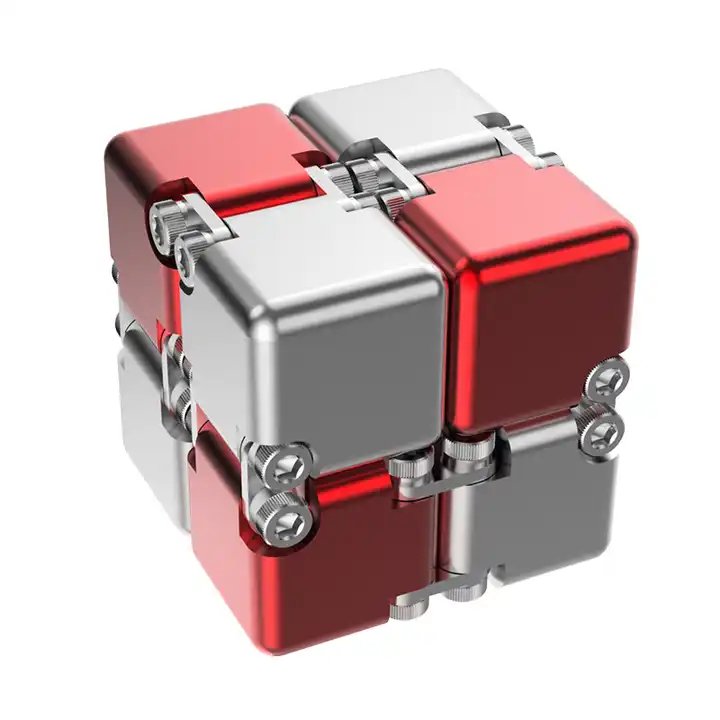
An infinity cube is eight small blocks hinged together so they fold over and over, with no end point. In India you can buy one for under ₹300 or pay ₹2,000 or more. Either way it looks like the same 4 cm cube in the photos. The real differences are the hinge, the material and the weight, and Indian listings are often wrong about all three.
This guide covers how the mechanism works, what a genuine metal cube should weigh, what's on sale in India today (with prices checked on 3 November 2026), what an import really costs, and when a metal cube is worth it.
How we wrote this
We haven't had any of these cubes in hand. Everything below comes from seller listings, maker and retailer spec sheets, published buyer comments on retailer sites, and basic material physics. All prices and stock were checked on 3 November 2026. Sizes and weights are seller-stated unless we say otherwise.
How an infinity cube works
Take eight equal cubes and join them into a closed loop with eight hinges, each along one edge. The hinges alternate between the three directions. That alternation is what lets the block keep opening and closing. As the German maths-craft site Mathematische Basteleien explains, the eight cubes have 48 faces between them. In any position 24 are visible and 24 are hidden, and folding cycles you through three different 2 × 4 rectangles before you're back to a cube.
Two details from people who've built their own explain most quality differences:
- Two hinges meet in the middle. On mitxela's forum, someone building a brass infinity cube asked whether the hinge across the centre was one piece. The designer said it's "just two hinges meeting in the centre". They're separate, and if they're placed too close they rub. On cheap cubes, slop or rubbing at that centre joint is where the wobble starts.
- The hinge cut-outs need deburring. The same designer warned that the pockets cut for the hinges leave "a slightly sharp edge" that wears down with use. On a budget metal cube, any sharp edges are usually at these hinge pockets.
The Yoshimoto myth
Many listings and blogs say the infinity cube was "invented by Naoki Yoshimoto in 1971". That's only half right. Yoshimoto did design a famous folding cube in 1971 and showed it in 1972 at an exhibition called From Cube to Space. Yoshimoto Cube No. 1 entered the Museum of Modern Art's permanent collection in 1982. But the Yoshimoto Cube is a more complex relative. Its pieces are split again (Mathematische Basteleien describes it as eight cubes or 16 half-cubes), and it opens out into two star-shaped solids. The simple eight-block toy sold as a fidget is better described as a magic folding cube. The same site records it as "the latest fashion in Germany" in September 2000, usually printed with pictures.
It also isn't the "Fidget Cube". That name usually means a six-sided plastic cube with buttons, switches and a joystick on its faces, which is a completely different toy. Search results mix the two up all the time.
What a real metal cube should weigh
Weight is the easiest way to see through a listing. An infinity cube is close to a solid block, so its weight is roughly the folded size cubed times the material's density. Hinge pockets, rounded edges and gaps take a little off, and screws and steel hinge plates add some back.
For the standard 40 mm cube (64 cm³), this is what a solid block of each material would weigh:
| Material | Density (g/cm³) | Solid 40 mm cube | What sellers actually list |
|---|---|---|---|
| ABS plastic | ~1.05 | ~67 g | 60 g (QiYi plastic cube on Flipkart, 3.5 cm) |
| Aluminium | 2.70 | ~173 g | 152 g (Hypergizmo buyer's own weighing); 200 g (Buckyballs Shop) |
| Aluminium–zinc alloy with steel hinges | — | between the two | ~215 g (SkillToyz, "frosted aluminium zinc alloy") |
| Zinc alloy (Zamak) | ~6.6 | ~420 g | No infinity cube we found listed this heavy |
| Stainless steel | ~8.0 | ~510 g | No cube we found with a stainless body (steel is used for hinges) |
| Brass | ~8.5 | ~545 g | Hobby builds only |
The rule of thumb: a 4 cm cube sold as aluminium should weigh about 150–215 g. A "metal" 4 cm cube listed at around 100 g is much lighter than solid aluminium. It's either plastic, hollow, smaller than claimed, or the weight is a placeholder. A kitchen scale settles it in five seconds. Weigh it the day it arrives, while you can still return it.
Two examples of why this matters:
- Spinning Toy, a Chinese supplier of logo-printed cubes, lists a 6061 aluminium cube at 40 × 40 × 40 mm and about 90 g. That's about half what solid 6061 aluminium at that size would weigh. Either the blocks are hollowed out or the figure is wrong, and the page doesn't say which.
- The Kaiko infinity cube sold by The Sensory Sloth is described as 108 g with a "metal-like finish". Metal-like is the giveaway: at that weight and finish, assume plated plastic or a light alloy, not machined aluminium.
Infinity cubes you can buy in India (checked 3 November 2026)
| Cube | Where | Material, as listed | Size, weight (seller-stated) | Price | Notes |
|---|---|---|---|---|---|
| MORADIYASALES M1S092 | Flipkart | Plastic | Not stated | ₹277 (MRP ₹1,199) | Dozens of near-identical listings from this seller and NexNest at ₹265–₹296 |
| QiYi infinity cube (Hawkister) | Flipkart, seller HOBBITOS | Plastic | 3.5 cm, 60 g | ₹295 (MRP ₹699) | Plastic weight matches the physics |
| NIRALASA "Portable Metal" | Flipkart, seller DHINGADHANIMALL | Title says metal; spec field says Plastic | 4 cm, 100 g | ₹313 (MRP ₹799) | Minimum age listed as 3 years |
| VATTU "Portable Metal" | Flipkart, seller VATTU | Title says metal; spec field says Plastic | 4 cm, 100 g | ₹322 (MRP ₹799) | Same listing text as NIRALASA and WROPZO |
| WROPZO "Portable Metal" | Flipkart, seller SAKARMALL | Description says "solid aluminum alloy"; spec field says Plastic | 4 cm, 100 g | ₹361 (MRP ₹799) | Minimum age listed as 3 years |
| KolorFish "Metal Infinity Cube Prime" | Flipkart, seller KolorFish | Aluminium | Listed as "15 inch" wide, "0.3 g" | ₹626 (MRP ₹999) | Specs obviously wrong; search page showed "Only 3 left" |
| MM Premium Metal Infinity Cube | MakerMesh (Coimbatore) | "Aluminium build", "solid alloy" | Not stated | ₹1,999 (compare-at ₹3,499) | Silver, Red, Black, Blue in stock; Gold sold out |
Amazon.in blocks automated access, so we couldn't check prices there. A Darling Toys "Metal Alloy" cube on Flipkart (listed at 120 g, 6 × 5 × 8 cm) showed no live price on the day we checked.
Three things stand out.
1. The ₹300–₹400 "metal" cubes on Flipkart describe themselves as plastic. Three listings from three different sellers (WROPZO, NIRALASA and VATTU) use the same title, "Fidget Toys for Adults Stress Relief Square Fidget Infinity Cube Portable Metal". The WROPZO listing's description says "crafted from solid aluminum alloy with a smooth anodized gold finish". Yet the structured spec on all three says Material: Plastic and 100 g, and lists the minimum age as 3 years. The 100 g figure fits the spec field, not the description. Nobody can promise what's in the box, but if you pay ₹313–₹361 expecting aluminium, expect to be disappointed.
2. Real aluminium starts at around ₹600, and the cheap end is a gamble. KolorFish's listing says aluminium, and ₹626 is a believable price for a basic anodised cube. But the spec sheet lists a 15-inch cube weighing 0.3 g, so you're buying on trust. Weigh it on arrival and use Flipkart's 7-day return if it's under about 140 g.
3. Nobody in India lists a weight for their premium cube. MakerMesh's ₹1,999 cube is the most clearly metal option sold domestically. Its title says "aluminium build", and its product images show screw-fixed steel hinge plates on every joint. But the listing gives no size, weight or hinge spec, and those images are 3D renders, not photos. The description says it has "satisfying weight and smooth hinges" and "silent operation". The first is believable for aluminium. The second we'd call quiet, not silent (see below). If weight matters to you, ask the shop for the figure before ordering. We know the MakerMesh team personally; see our MakerMesh shop review for how we handle that.
What importing one costs
International prices for a basic aluminium cube are modest. SkillToyz (UK) sells its 215 g cube at £9.99 (≈₹1,272). Buckyballs Shop lists a 200 g CNC-machined cube at $19.99 (≈₹1,898), sold out when we checked. Hypergizmo charges $18.79 (≈₹1,784). Conversions use 3 November rates (₹94.93/$, ₹127.29/£), before shipping.
Then duty. Tariff sites list 70% basic customs duty on toys under HS 9503, with IGST charged on the duty-inclusive value. They disagree on whether that IGST is 5% or 18%, and on surcharges. A $19.99 cube that's assessed would cost about ₹3,400–₹3,800 before shipping, nearly double MakerMesh's domestic price for a broadly similar aluminium cube. Our haptic coins guide covers the same maths for a pricier fidget. For something as simple as an infinity cube, importing doesn't make sense unless the design is unusual.
One example of unusual: Fidgee's Infinite Cube ($55, ≈₹5,221) is "aerospace-grade aluminum", but it's a magnetic modular cube you take apart and rebuild, not a hinged folding loop. If you want one of those, read our magnet safety guide first.
Metal vs plastic: what actually changes
| Plastic (₹265–₹400) | Aluminium (≈₹600–₹2,000 in India) | |
|---|---|---|
| Weight (4 cm) | 60–75 g | 150–215 g |
| Hinge | Usually plastic or riveted; loosens over time | Screwed or pinned steel plates on better ones |
| Sound | Light plastic tick, rattles when worn | Low "clack" when blocks meet |
| Feel | Toy-like, easy to flick fast | Dense, slower, cool to touch |
| Failure mode | Hinges wear, cubes crack | Dents and scratched anodising if dropped; screws can back out |
| Return risk | Low price, little to lose | Main risk is a "metal" listing that isn't |
Hinges are the whole product. The Fidget Toy Hub guide calls hinges "the most vulnerable part". It says plastic hinges can turn loose and wobbly within weeks of daily use, and that metal cubes tend to have more consistent hinges. One buyer review on Hypergizmo complains the hinges have "too much slack". It calls that "the only con" of an otherwise all-metal cube, so metal doesn't guarantee tight tolerances either.
Metal is quieter in one way and louder in another. It doesn't rattle like a worn plastic cube, but the blocks are heavy enough to clack when they meet. Hypergizmo buyers split on this. One calls the cube "a little clacky so not good for quiet environments"; another says "the metal clack while playing is quite satisfying". For meetings, fold slowly and the blocks settle rather than slap. Our quiet fidget toys guide covers this in more detail, and the loudness glossary entry explains what we mean by "quiet".
Weight is a feature until it isn't. 200 g is about the weight of a smartphone. That heft is what makes a metal cube feel calm and deliberate. Digital Wellness Labs' write-up of the PILPOC theFube aluminium cube lists "weight can be tiring for one-handed use over long periods" as a downside. If you fidget for hours, or have wrist or hand pain, a plastic cube may suit you better.
Material choices beyond aluminium. Some cubes are brass, which is heavy and looks good. But mitxela notes that brass "does leave a residue on your hands after playing with it for a while" and suggests stainless steel instead. Our materials guide covers how aluminium, steel, brass and titanium compare across fidgets generally.
Looking after a metal infinity cube
- Don't oil it. Fidget Toy Hub notes most cube hinges are designed to run dry. Oil collects dust and pocket lint and turns it into grit. Wipe it with a dry cloth instead.
- If the hinges are screwed (as in MakerMesh's product images), a loose block usually means a screw backing out. A gentle quarter-turn with a precision screwdriver fixes it. Overtightening makes the fold stiff. A drop of low-strength threadlocker on a screw that keeps loosening is the usual hobbyist fix. Don't use it on plastic.
- Don't force a stuck fold. It bends the hinge plate, and a bent plate never folds smoothly again.
- Anodising scratches. Coloured aluminium shows bright silver where it's been knocked. Silver and black hide it best. In a pocket with keys, every colour gets marked.
Downsides — who should NOT buy a metal infinity cube
- Children. Every fidget on this site is rated 14+. A metal cube is heavy enough to hurt when thrown, and screwed hinges mean tiny screws can come out. Several Flipkart listings put the minimum age at 3 years, which we'd ignore. That also matters legally: under India's Toys (Quality Control) Order, anything sold as a toy for under-14s must carry the BIS ISI mark.
- People who want feedback. An infinity cube has no click, no detent and no spring. If you like a clear "snap", look at a slider or a haptic coin instead. Our spinner vs slider vs clicker guide explains the types.
- Pocket carriers. A 4 cm, 200 g cube is a bulge in trouser pockets. It's a desk, bag or jacket fidget.
- Anyone whose first fidget this is, at ₹2,000. If you've never used an infinity cube, a ₹277 plastic one will tell you whether you like the motion. If you use it every day for a month and it starts to rattle, then upgrade.
- Anyone tempted by a ₹350 "metal" cube. See above: those listings say plastic in their own specs.
Verdict: are metal infinity cubes worth it?
Yes, if you'll use it every day, mostly at a desk or in meetings, and you buy real aluminium. The step up from plastic is weight, hinge life and a calmer, slower fold. That's worth paying for if the cube is going to live in your hand for an hour a day.
In India today that means two options:
- Budget test: a ₹277–₹295 plastic cube from Flipkart. Buy one that honestly says plastic, such as the 60 g QiYi. Treat it as a month-long trial of the motion, not a long-term fidget.
- The upgrade: MakerMesh's MM Premium Metal Infinity Cube at ₹1,999. It's an aluminium cube with screwed hinge plates, four colours in stock, domestic shipping and no customs. MakerMesh is a shop whose products are generally good, and this is the clearest domestic metal option we found. Our one complaint is that it doesn't publish a weight, so ask for it or weigh it on arrival. A genuine aluminium cube this size should be around 150–215 g.
The ₹626 KolorFish cube sits in between. It may be fine, but with a spec sheet that lists a 0.3 g cube, you're relying on Flipkart's 7-day return. Importing a $20 cube makes no sense once duty is added.
Skip it if you want click feedback, need something for your pocket, or are buying for a child.
FAQ
Is a metal infinity cube silent enough for office meetings? Quieter than most fidgets, but not silent. Metal blocks can clack when they meet. Fold slowly in your lap and it's close to inaudible; flick it fast on a desk and people will hear it. Worn plastic cubes are worse, because they rattle.
How can I tell if a Flipkart or Amazon "metal" infinity cube is really metal? Check the structured spec ("Material") as well as the title, and compare the weight. A 4 cm aluminium cube should be roughly 150–215 g; around 100 g or less usually means plastic or hollow. When it arrives, put it on a kitchen scale and return it inside the return window if the weight is wrong.
Can I get cash on delivery for an infinity cube in India? The WROPZO and KolorFish listings on Flipkart both showed cash on delivery and a 7-day return when we checked. For MakerMesh and other independent shops, check the options at checkout. If you import from the UK or US, you pay by card, and any customs duty is paid to the courier on delivery.
Will I pay customs on an infinity cube from abroad? Possibly. Toys under HS 9503 carry a 70% basic customs duty plus IGST if the parcel is assessed. That turns a ₹1,900 cube into roughly ₹3,400–₹3,800 before shipping, more than buying locally.
Is a metal infinity cube a good gift? For an adult who fidgets at a desk, yes. It's one of the few fidgets that looks like a desk object rather than a toy. Pick silver or black if the person carries it with keys, as coloured anodising shows scratches. Not for young children: it's heavy, and the hinges use tiny screws.
Do infinity cubes help with ADHD or anxiety? Many people find a repetitive, endless motion helps them stay settled during calls or while thinking. An infinity cube doesn't treat any condition, and if it doesn't suit you, nothing's wrong. Some people prefer a clicker or a spinner.
Related
- Quiet fidget toys for the office and meetings
- Choosing a material: aluminium, steel, brass, titanium
- Best fidget toys for adults in India
- Where to buy fidget toys in India
Sources
- MakerMesh — MM Premium Metal Infinity Cube (price and stock from the store's product JSON)
- MakerMesh — Premium infinity cube India (blog)
- Flipkart — WROPZO "Portable Metal" infinity cube
- Flipkart — NIRALASA "Portable Metal" infinity cube
- Flipkart — VATTU "Portable Metal" infinity cube
- Flipkart — KolorFish Metal Infinity Cube Prime
- Flipkart — MORADIYASALES infinity cube M1S092
- Flipkart — Hawkister QiYi infinity cube
- Flipkart — Darling Toys metal alloy infinity cube
- SkillToyz — Premium metal infinity fidget cube
- Buckyballs Shop — New version metal infinity fidget cube
- Hypergizmo — Metal fidget infinity cube (specs and buyer reviews)
- Spinning Toy — Logo-printed metal infinity cube
- The Sensory Sloth — Kaiko infinity cube fidget 108 g
- Fidgee — Infinite Cube
- Digital Wellness Labs — PILPOC theFube infinity cube review
- Fidget Toy Hub — Infinity cube fidget toy guide
- Mathematische Basteleien — Magic folding cube
- mitxela forum — Question on the infinity cube design
- Wikipedia — Yoshimoto Cube
- EximPe — Toys HSN code 9503: GST and import duty
- India Briefing — BIS toy certification guide